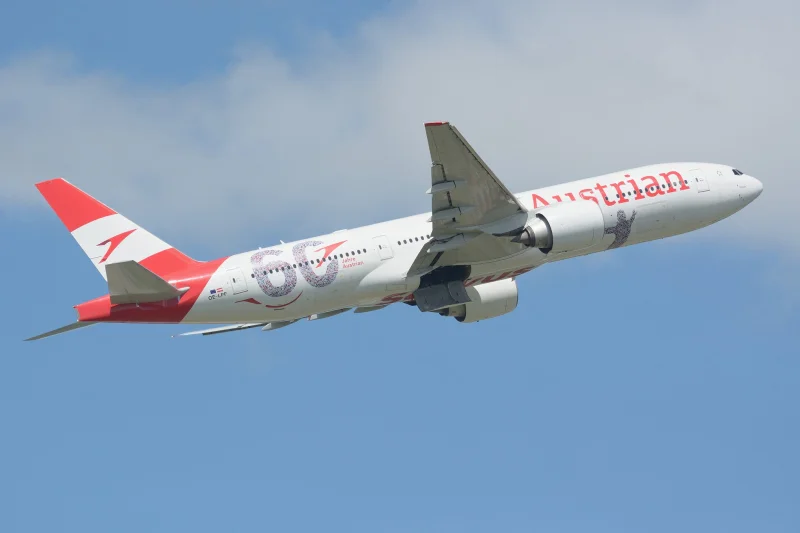
Austrian Airlines has recorded reductions in fuel consumption and emissions after one year of operating aircraft fitted with AeroSHARK technology.
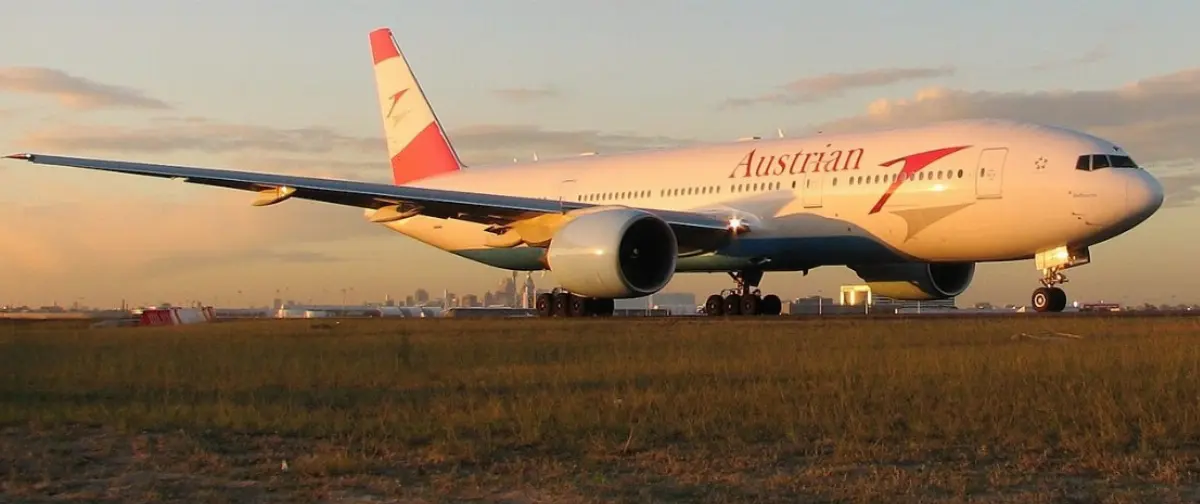
The modification has been applied to four Boeing 777-200ER aircraft in the airline’s long-haul fleet, which have been in service with the system since March 2025.
Measurable efficiency gains across operations
Data collected over a year of operations indicates a drag reduction of 0.7% on aircraft equipped with the technology. This has resulted in fuel savings of between 0.7% and 0.9%, depending on the route, according to Austrian Airlines.
The airline reported the total amount of fuel saved was approximately 930 tonnes over the period. According to Austrian Airlines operational analysis conducted with Lufthansa Technik, a reduction of around 3,000 tonnes of carbon dioxide emissions.
AeroSHARK, developed by Lufthansa Technik and BASF, is a product comprising a microstructured surface film applied to the fuselage and engine nacelles. By reducing aerodynamic drag, the film helps aircraft use less fuel during flight, which in turn lowers emissions and operating costs. The material is designed to improve airflow and reduce aerodynamic resistance.
Wider operational and environmental measures to be implemented
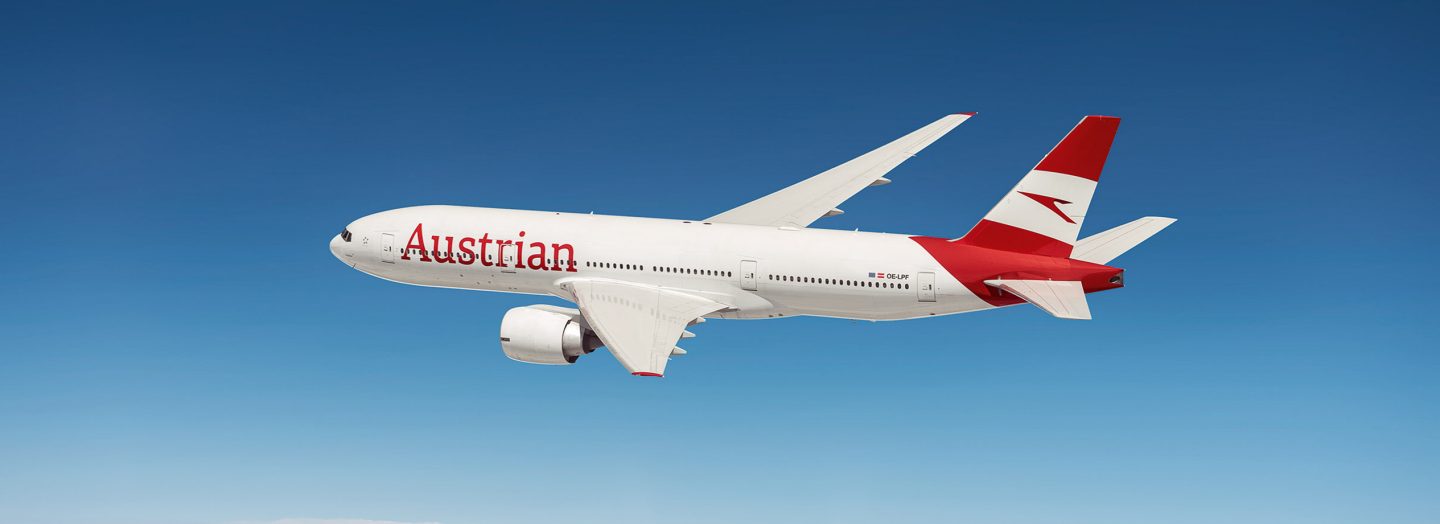
The technology has been installed on four aircraft, all of which have been operating with the modification for the past year. Adjustments have also been made to maintenance processes, including cleaning procedures, to accommodate the surface film.
The use of AeroSHARK forms part of broader measures aimed at reducing fuel consumption and emissions. These include fleet updates, the use of sustainable aviation fuels, and operational changes such as route optimisation and onboard weight reduction.
The airline said the first year of AeroSHARK operations has delivered measurable efficiency improvements. Austrian Airlines continues to monitor the performance of the technology as part of its efforts to reduce fuel consumption and emissions.
What do you think about the emissions savings? Let us know in the comments below.