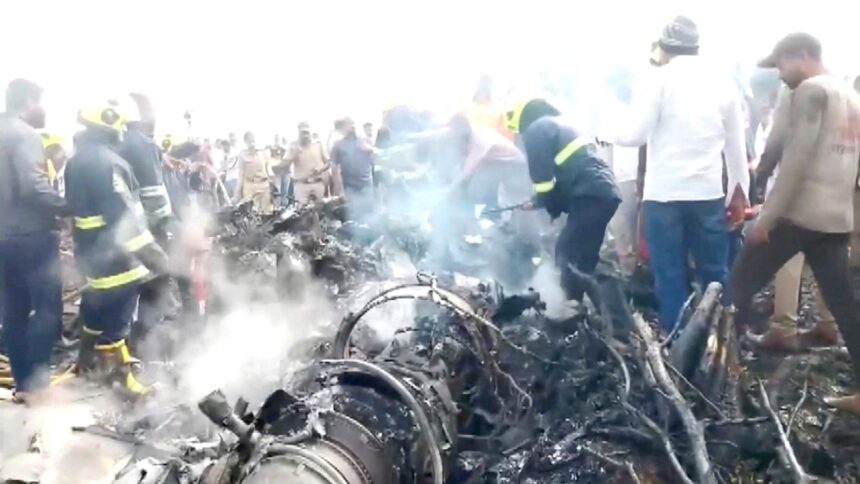
A Bombadier Learjet 45 carrying Maharashtra Deputy Chief Minister Ajit Pawar, crashed in western India on Wednesday, killing all five people on board. The aircraft, travelling from Mumbai, crashed while trying to land at Baramati airport. Though the cause has not been confirmed, officials noted that visibility was poor. An investigation now proceeds.
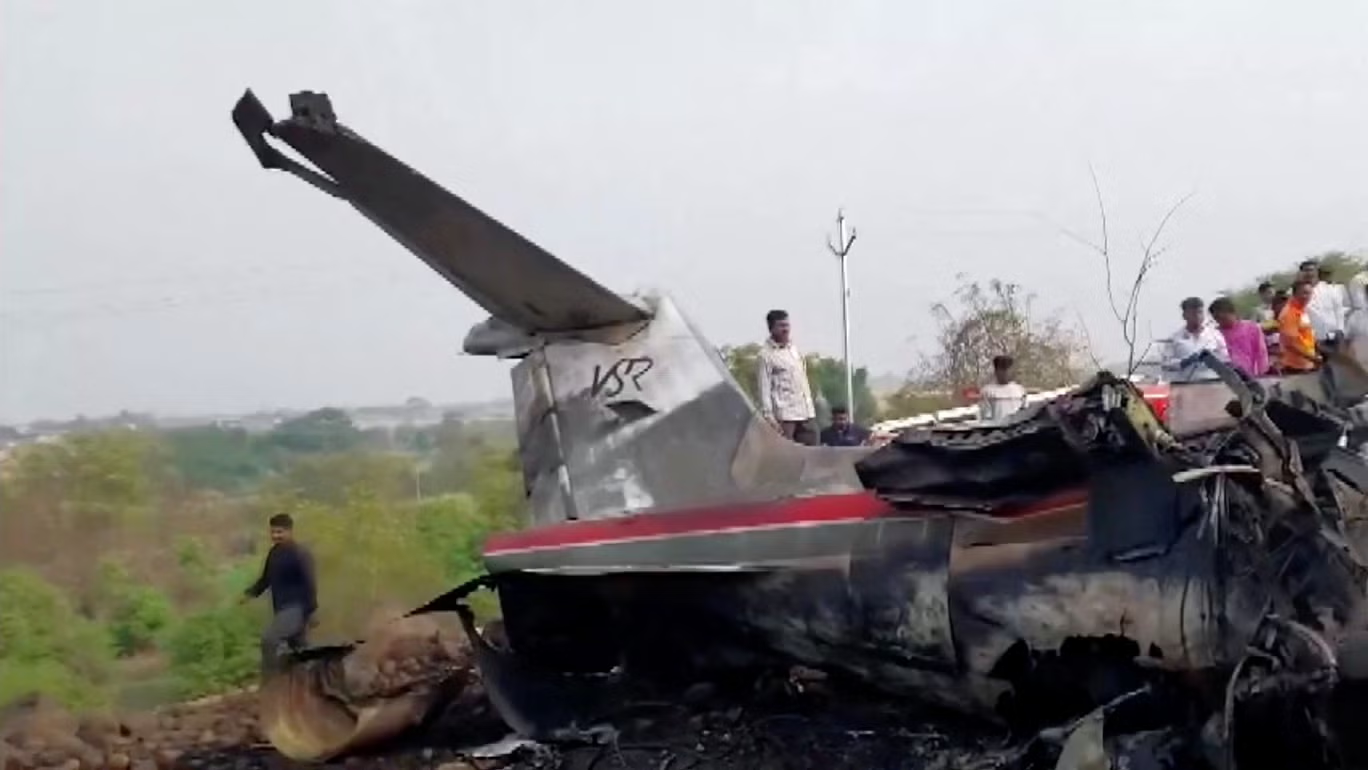
Second Landing Attempt ended with Crash
Flight tracking data revealed the Learjet approaching Baramati at around 08:30 local time. Nearing the runway, the aircraft climbed away and increased speed, indicating the crew had aborted the first attempt to land.
Despite this, the jet appeared to circle the airfield before lining up again. During the second approach, the aircraft’s tracking signal stopped. Witnesses at the scene reported seeing the plane hit the ground and immediately burst into fire after impact.
India’s aviation minister, K Ram Mohan Naidu, suggested visibility at the airport was poor at the time. According to the ministry, the aircraft had been cleared to land but did not respond to air traffic control in the final moments.
While there has been no release of air traffic control recordings, officials have implied these records will be critical in understanding what happened during the approach.
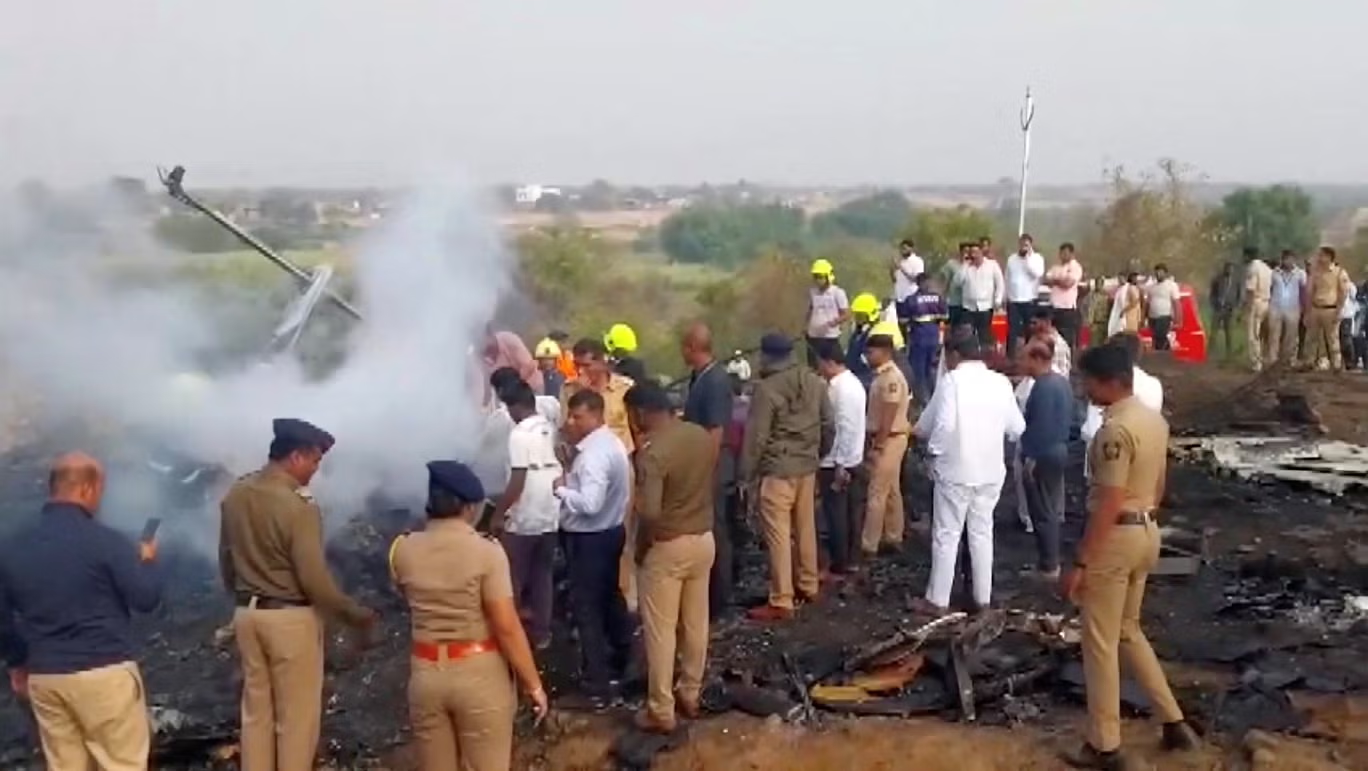
Focus turns to Regional Airport as Investigation ensues
Investigators from the Aircraft Accident Investigation Bureau (AAIB) and the Directorate General of Civil Aviation have arrived at Baramati to begin examining the wreckage.
Primarily, the inquiry will look at the aircraft’s flight path, the crew’s actions during the missed approach and the conditions at the airport. As Baramati is a smaller regional airport and does not have the same infrastructure as larger hubs like Mumbai, the inquiry will also examine the runway layout and landing aids.
The Learjet 45 is popular among charter and VIP flights in India, particularly when taking shorter routes between cities. Aviation specialists say approaches into regional airports can become challenging in poor weather, especially during hazy early morning operations.
Overall, officials have not said when preliminary findings will be released. But they have cautioned that it is too soon to draw conclusions about the cause of the crash.
What lessons could emerge for airport safety? Share your thoughts in the comments below.