By using this site, you agree to the Privacy Policy and Terms of Use.
Accept
Travel Radar - Aviation NewsTravel Radar - Aviation News
  • Breaking News
  • Aviation
    • Aircraft
    • Airlines
    • Airshow & Events
    • Careers
    • Manufacturing
  • Travel
    • Airports
    • Points & Loyalty
    • Technology
    • Trip Reviews
  • Newsletters
  • Aircraft for Sale
Reading: Bad Weather Conditions will not Prevent a Comfortable Flight
Share
Sign In
Notification Show More
Font ResizerAa
Font ResizerAa
Travel Radar - Aviation NewsTravel Radar - Aviation News
  • Breaking News
  • Aviation
  • Travel
  • Newsletters
  • Aircraft for Sale
  • Breaking News
  • Aviation
    • Aircraft
    • Airlines
    • Airshow & Events
    • Careers
    • Manufacturing
  • Travel
    • Airports
    • Points & Loyalty
    • Technology
    • Trip Reviews
  • Newsletters
  • Aircraft for Sale
Signin Sign In
Follow US
Copyright © Travel Radar Media Ltd. 2025 | All Rights Reserved
Travel Radar - Aviation News > News > Aviation > Aircraft > Bad Weather Conditions will not Prevent a Comfortable Flight
AircraftAviationDid You KnowTravel

Bad Weather Conditions will not Prevent a Comfortable Flight

Karolina Kirillova
Last updated: 16 October 2024 21:42
By Karolina Kirillova
5 Min Read
Share
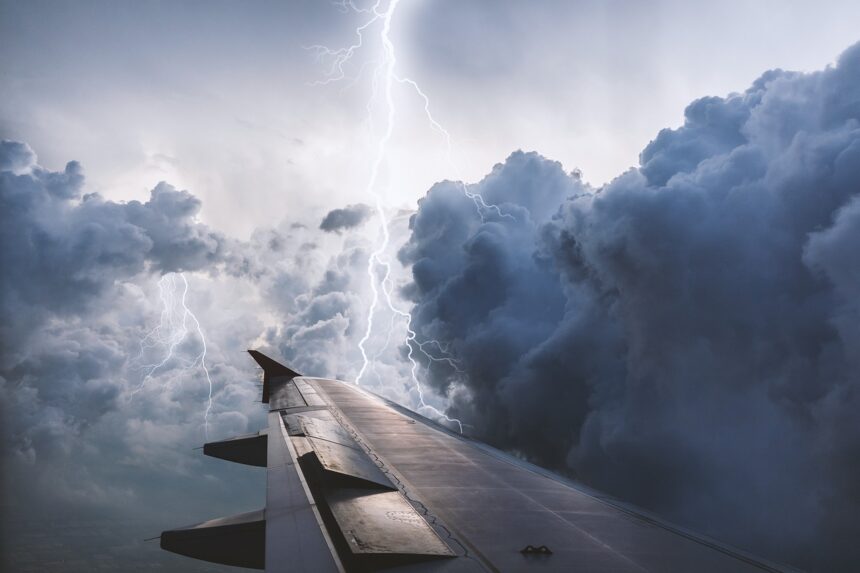
The image of a view from a flying plane during weather conditions.
View from a Flying Plane During Weather Conditions. © Pfüderi
SHARE

Have you ever wondered how planes handle extreme weather? As it is not subject to human control, adverse weather conditions during flights can be unpredictable and dangerous to passengers and aircraft.

Summary
Handling Strong WindsFlying During ThunderstormsIcy and Snowy ConditionsExtreme Temperature Changes

However, engineering and advanced technologies can combat the threat posed by strong winds, thunderstorms, icy environments, and extreme heat and cold. Through constant research, the aviation industry is improving systems that detect, withstand, and avoid adverse flight conditions, allowing aircraft to fly in even the most difficult situations.

Handling Strong Winds

The image of a flying plane.
Flying Plane. © pruslee

When challenged by strong winds, pilots must perform demanding manoeuvres to avoid losing their way. In a crosswind, landing becomes more difficult because the wind blows perpendicular to the plane’s trajectory. To prevent the aircraft from deflecting, pilots use side-slipping or angle the nose of the plane to the wind (a process known as crabbing). This also helps pilots to control the landing process and makes it safer.

Pilots are trained to execute these manoeuvres using simulation. Autopilot systems can also be utilised. They use sliding mode control technologies to increase landing performance in windy weather and maintain the aircraft’s stability during turbulence.

Flying During Thunderstorms
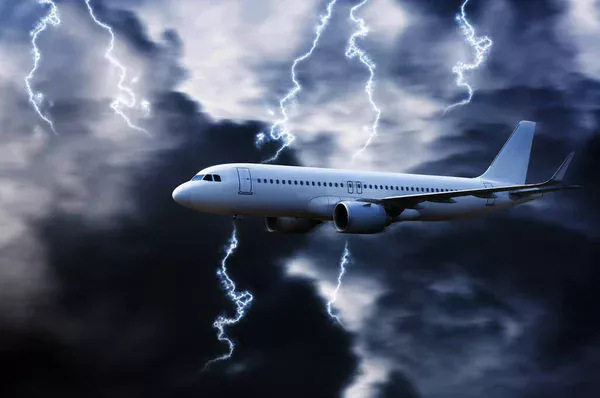
The image of a flying plane during thunderstorm.
Plane Flight During Thunderstorm. © rawintanpin

Onboard weather radar systems are specially designed to detect thunderstorms. They help pilots build a safe flight path by providing real-time data on precipitation intensity, storm cells and possible turbulence zones. They can also adjust the airspeed, altitude and trajectory of an aircraft. This helps to bypass hazardous areas, avoid high turbulence and minimise the impact of strong air flows during a storm.

Modern aeroplanes are designed to survive lightning as they are built using materials with conductive properties. They can securely direct electrical power over their surface and away from essential systems, protecting passengers and ensuring continued flight functions during challenging weather conditions.

Icy and Snowy Conditions

The image of a plane flying during icy and snowy conditions.
Icy and Snowy Conditions During the Flight. © sinada

Ice buildup on planes poses serious risks, including changing airflow across the wings, limiting lift, and impairing engine efficiency. Ice can form on different parts of the aeroplane and threaten the safety of the flight. Luckily, there are various safety mechanisms which protect planes against ice.

For example, to prevent ice from forming, the surface of the plane’s wings is equipped with a heating system. The engines and fuselage do not freeze as a special protection system defends them against ice formation. Before taking off, the aircraft’s surface is sprayed with de-icing fluids to avoid ice accumulation during the early stages of the flight. Icephobic coatings are the newest way to prevent ice from sticking, protecting the plane from freezing conditions.

Extreme Temperature Changes

The image of two flying planes against the sunset.
Two Flying Planes. © ThePixelman

In extreme heat, it is harder to fly a plane because the air density changes during take-off and reduces lift force. To minimise possible dangers, engineers will adjust take-off procedures. For example, they may lengthen the runway or create composites that can bear temperature stress. However, in the future, the rise of global temperatures may further complicate the takeoff performance of aircraft, and further developments in engineering will be required.

Currently, aircraft design and engineering solutions allow planes to withstand sudden temperature changes. Extreme cold at high altitudes may affect the materials and performance of the engine, but serious complications rarely happen. The anti-icing measures and sophisticated insulation and heating systems maintain functionality and comfort to keep the plane safe.

Aviation technology continues to evolve, providing efficient and safe flights even in the most adverse weather.

Have you had moments when you were worried about weather conditions during a flight? Tell us about your experiences in the comments.


You Might Also Like

Copenhagen Airport, Kastrup: Scandinavia’s Largest and Busiest Airport
Azores Government Moves for New Privatisation Attempt of Azores Airlines
Qantas Remains Australia’s Most Punctual Airline
Emirates Reveals Data for World Chocolate Day
Qatar Airways: A strategic investment into the Australian market
Share This Article
Facebook Twitter Email Copy Link
What’s your thoughts?
Love0
Sad1
Happy0
Angry0
ByKarolina Kirillova
Aviation Reporter - Starting with Travel Radar as an intern in 2024, Karolina is a content writer and editor. With foreign language, independent research and digital marketing know-how, Karolina delves deep into the latest news to find the true story.
Previous Article Does Business Class Cater To The Needs Of The Business Traveller?
Next Article A boy looks at aircraft in an airport Indian airlines plagued by hoax bomb threats
Leave a Comment

Leave a Reply Cancel reply

Your email address will not be published. Required fields are marked *


Stay Connected

FacebookLike
TwitterFollow
InstagramFollow
YoutubeSubscribe

Trending News

San Francisco International Airport seen from above at night. The runways and the terminals are lit.
San Francisco Airport with Longer Delays
Airports Aviation
A white plain with some red detailing on the tail in picture from directly below, at quite some distance. It is pictured between trees and bright green leaves and foliage against a bright blue sky backdrop.
UK Government Invest £219 Million to Boost Green Aviation
Aviation Did You Know Travel
The Bucher G1B flying against clouds
Airbus adds Bucher to A320 supplier list with new galley and stowage solutions
Aircraft Aviation
A line of Cessna Citation and Beechcraft aircraft parked on an airport apron as volunteer pilots prepare for the Special Olympics Airlift mission
Textron calls on aircraft owners for 2026 Special Olympics Airlift
Aircraft Airshow & Events Aviation Did You Know
Austrian Airlines airbus A320neo flying over the clouds
Austrian Airlines appoints Dieter Vranckx as Supervisory Board Chairman
Airlines Careers Did You Know

Travel Radar is the leading digital hub for all things aviation and air-travel. Discover our latest aviation news, aviation data, insight and analysis.


Discover

  • Latest News
  • Subscribe
  • Weekly Digest
  • Contact Us
  • Privacy Policy
  • About Us
  • Advertising
  • Media Coverage
  • Press & Events
  • Join Our Team
  • Our Brands

Signup to our Newsletter!

And get the latest aviation news via our weekly news digest!

© Travel Radar Media Ltd. 2015-2026 | ISSN #2635-0696 | Trademark #UK00003579704
adbanner
Welcome to the TR Community!

Sign in to your account

Not a member? Sign Up