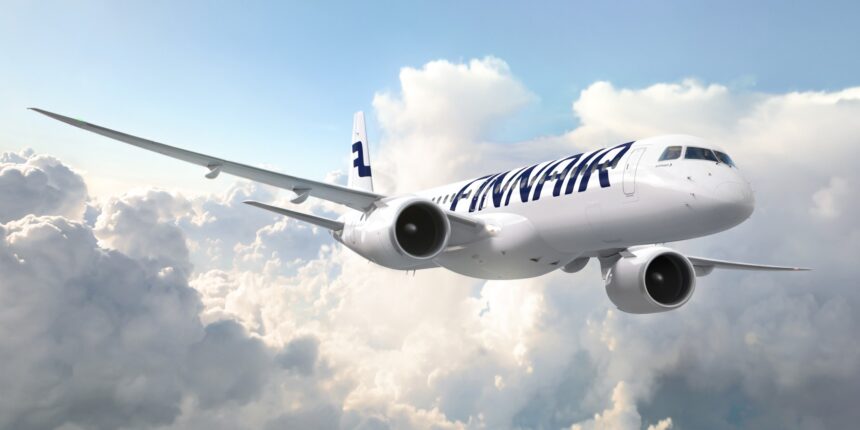
The aircraft manufacturer Embraer has reported an aircraft backlog worth $35.7 billion, the largest in the company’s history. The majority of this backlog stems from firm orders placed on Embraer’s commercial aircraft, particularly the Embraer E195-E2, and the manufacturer’s services and support sector. The record figure, which dates to the end of the third quarter of 2026, represents a 3% quarter on quarter rise, and is 14% higher than at the same time in 2025.
Why is Embraer’s Aircraft Backlog Growing?
Orders for commercial aircraft accounted for over 44% of the value of Embraer’s aircraft backlog.
This sector experienced faster quarter on quarter growth than any other part of Embraer’s operations, with the value of the commercial aircraft backlog being 5% higher at the end of September 2026 than it was three months earlier.
This growth has been enabled by the 36 firm orders, orders which are legally binding, for commercial aircraft which the manufacturer received in the third quarter.
This included an order for 20 E195-E2 jets from the multinational Abra Group of airlines.
Embraer’s defence and security aircraft backlog experienced the fastest year on year growth, rising to a total value of $6.1 billion in September 2026, up from roughly $3.9 billion a year prior.
The backlog on orders for executive aircraft rose by 12% year on year to $8.1 billion, while Embraer’s services and support sector backlog are 14% year on year to a value of $5.6 billion.
This success was partially due to the manufacturer signing long-term service agreements Alliance Airlines’ and Portugalia Airlines’ fleets of Embraer E190 jets.
What is an Aircraft Backlog?
An aircraft manufacturer’s backlog refers to the total value of firm orders that the manufacturer has received, but has not yet delivered on.
A growing backlog can be a sign of unexpectedly high demand, which will be welcomed by Embraer’s management.
It could however result in supply chain issues, and delays in the delivery time for aircrafts, if the manufacturer is incapable of expanding its rate of production, in order to meet the rising demand.
While these latest figures show that Embraer’s backlog is higher than it has ever been previously, it is still much smaller than those of larger manufacturers.
Boeing’s backlog was valued at $715.3 billion at the end of the third quarter of 2026, while Airbus’ was last reported as being worth $693.4 billion, at the end of 2025.
Is a growing backlog a good sign for Embraer? Can the manufacturer meet rising demand? Let us know what you think in the comments.