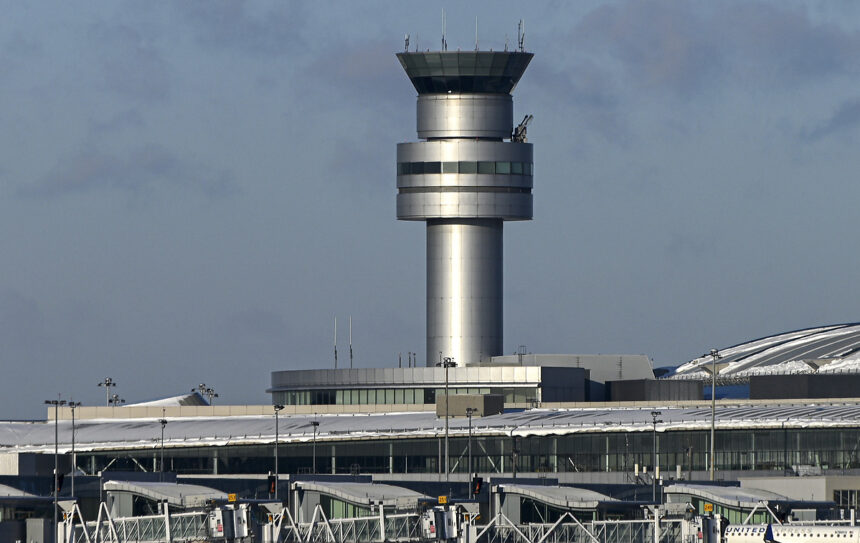
New artificial intelligence (AI) could be implemented as early as Sept. 21, this coming Monday, by the Federal Aviation Administration (FAA) to assist with air traffic control (ATC) operations. The technology is set to debut in the Washington, D.C. area prior to a nationwide rollout. The AI tool is being adopted amidst calls for an overhaul of aging aviation infrastructure in the United States as well as persistent ATC staffing shortages.
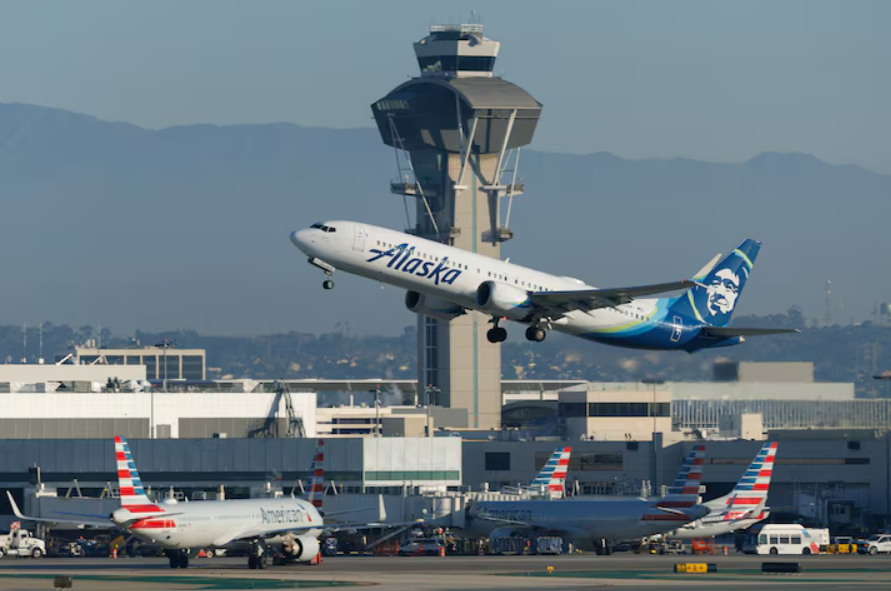
$875 Million Investment into AI Technology by FAA
The Federal Aviation Administration (FAA) has confirmed a new AI-powered tool will be launched to assist air traffic controllers in the United States, debuting in the Washington, D.C. area.
The software developed is known as SMART, which stands for Strategic Management of Airspace, Routes, and Trajectories. It was developed by Air Space Intelligence under an $875 million grant awarded by the U.S. government earlier this year for a 12-year contract.
SMART is a “cloud-based platform system that enhances existing FAA air traffic management systems”, according to a report by News Bytes. It is designed to analyse flight schedules, weather forecasts, airport runway capacity, and operational limits in order to predict traffic flows and flag potential issues or disruptions ahead of time.
The primary goal of the software launch is to manage schedule disruptions alongside the FAA and airline carriers in order to reduce delay times and cancellations when errors occur.
In its current phase, SMART will be implemented as a decision-support tool that is primarily used during operational disruptions. Industry officials have stated that future iterations of the tool are predicted to be able to deal with more complex tasks such as managing flight arrival intervals and mapping out route days.
An Overhaul of US Aviation Infrastructure
The launch of SMART coincides with a larger push from the Trump administration to refresh the nation’s air-traffic infrastructure, largely through technological investments and addressing the longstanding concerns surrounding ATC staffing shortages.
The FAA has reportedly been in discussion with commercial airlines regarding how schedule coordination will be integrated into the software’s broader rollout, according to The Wall Street Journal. This has led to some industry officials querying how the system will function considering the intense market competition for peak flight slots at certain times of day.
During a Senate testimony earlier this year, FAA Administrator Bryan Bedford commented on the planned developments for aviation infrastructure:
“The way we manage traffic today is chaotic, and we can do better. We need to manage that at the FAA, rather than rely on commercial airlines to simply schedule however they want.”
Alongside the launch of the AI software, federal officials plan to unveil a central office for the tool at the Transportation Department’s headquarters on Monday, Sept. 21., according to government officials.
Airlines for America, a trade association that represents major domestic carriers within the U.S., told the Wall Street Journal that the software had great potential to bolster safety, expand airspace capacity, and improve overall efficiency of ATC. The organisation described the project as “one of the most exciting and bold initiatives taken on by the FAA in decades.”
Alongside the implementation of new technology, the FAA also announced it would be implementing a hiring plan to address, and hopefully eradicate, the longstanding staffing shortage plaguing the industry.
What do you think of this AI software being used by air traffic controllers? Let us know in the comments below.