A new Heathrow Infrastructure Skills Council has been launched by London Heathrow Airport (LHR), Manufacturers’ Organisation Make UK, Trades Union Congress (TUC) and senior former government figures. The council’s ambition is to harness major infrastructure projects, such as the planned LHR expansion, to tackle Britain’s NEETs crisis (young people Not in Education, Employment or Training).
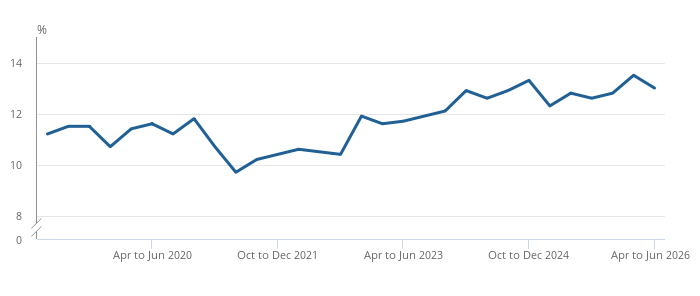
According to the Labour Market Team, there were an estimated 981,000 young people aged 16 to 24 years in the UK who were NEET between April and June 2026 (13.0% of all young people). This number is down 30,000 compared to January to March 2026 (down 0.5%) but up 30,000 when compared to the same period last year (up 0.2%).
The new Heathrow Infrastructure Skills Council will bring together businesses, trade unions, colleges and training partners to explore clearer job routes for young people into skilled careers. It will be co-chaired by former Education Secretary and Home Secretary Lord Blunkett and former Skills and Apprenticeships Minister (now Executive Director of Make UK) Robert Halfon. Alan Milburn, the UK government’s independent reviewer into young people and work, also endorses the council’s aim to identify, report on and create opportunities for young people.
The Heathrow Infrastructure Skills Council will meet with young people and local stakeholders (including employers, colleges and training providers) four times a year in regions across the UK. Regional mayors and local authorities will also be invited, following the recent devolution announcement that funding and employment support for 16-19 year olds will transfer to mayors.
Thomas Woldbye, Chief Executive Officer of LHR said:
“Heathrow expansion is an incredible opportunity to futureproof the UK’s critical national infrastructure and to build the skilled workforce the nation needs. We want young people in every region and nation to share in the benefits of expansion, gaining the training, experience and pathways into rewarding careers that major projects can provide. This is a nationally significant project that will inspire, train, and develop the next generation of skilled workers, leaving a lasting legacy.”
A findings report will be published by the Heathrow Infrastructure Skills Council to inform Heathrow, the wider infrastructure industry and the government of its recommendations.
LHR’s £49 billion expansion plans include a third runway along with terminals, car parks, roads and other infrastructure by the mid-2030s. If the project is approved in 2029, it would see LHR’s annual capacity increase to 756,000 flights and 150 million passengers.
It is estimated 108,000 recruits will be needed for the expansion but with current significant skill shortages, there is concern that demand for workers will outstrip supply. LHR has stated the expansion will create jobs in construction, engineering, logistics and the wider supply chain in every British region.. LHR has also pledged that it will develop a skills plan to deliver 5,000 apprenticeships and training opportunities for young people to help deliver a third runway.
The expansion plans have faced criticism, recently from the Mayor of London, Sadiq Khan, due to the potential adverse effects on the environment. Other critics are concerned that the plans will increase passenger airfares in order to recoup costs. Most recently, Selahattin Bilgen, Chief Executive of Turkey’s iGA Istanbul Airport (IST) suggested that pursuing a replacement airport in London may well be cheaper and quicker than building a third runway. IST opened in 2018 and in July 2026, overtook LHR in terms of passenger numbers, making it Europe’s busiest airport that month. Interestingly, IST is set up open its fourth runway on Sept.18, 2026, as part of plans to increase its annual terminal capacity to 120 million.
Do you think the new Heathrow Infrastructure Skills Council is a positive step-forward to help address both the UK’s NEET crisis as well as an anticipated skills shortage for LHR’s expansion plans? Let us know in the comments below.