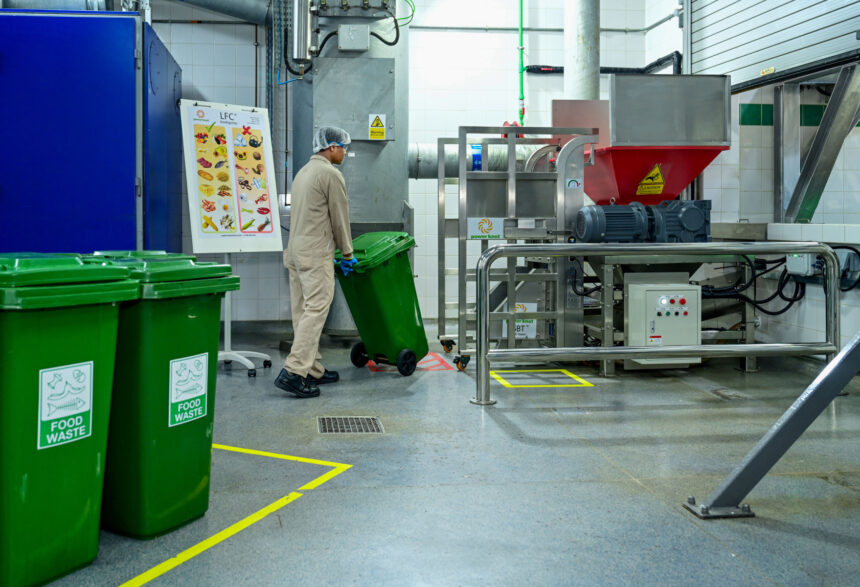
EKFC (Emirates Flight Catering) aim to make a advancement in their sustainability efforts by commissioning a large-scale biodigester. The Power Knot LFC-3000 biodigester at EKFC’s Central Commissary Unit allows for on-site processing of organic waste, treating it at the source rather than diverting it to landfill.
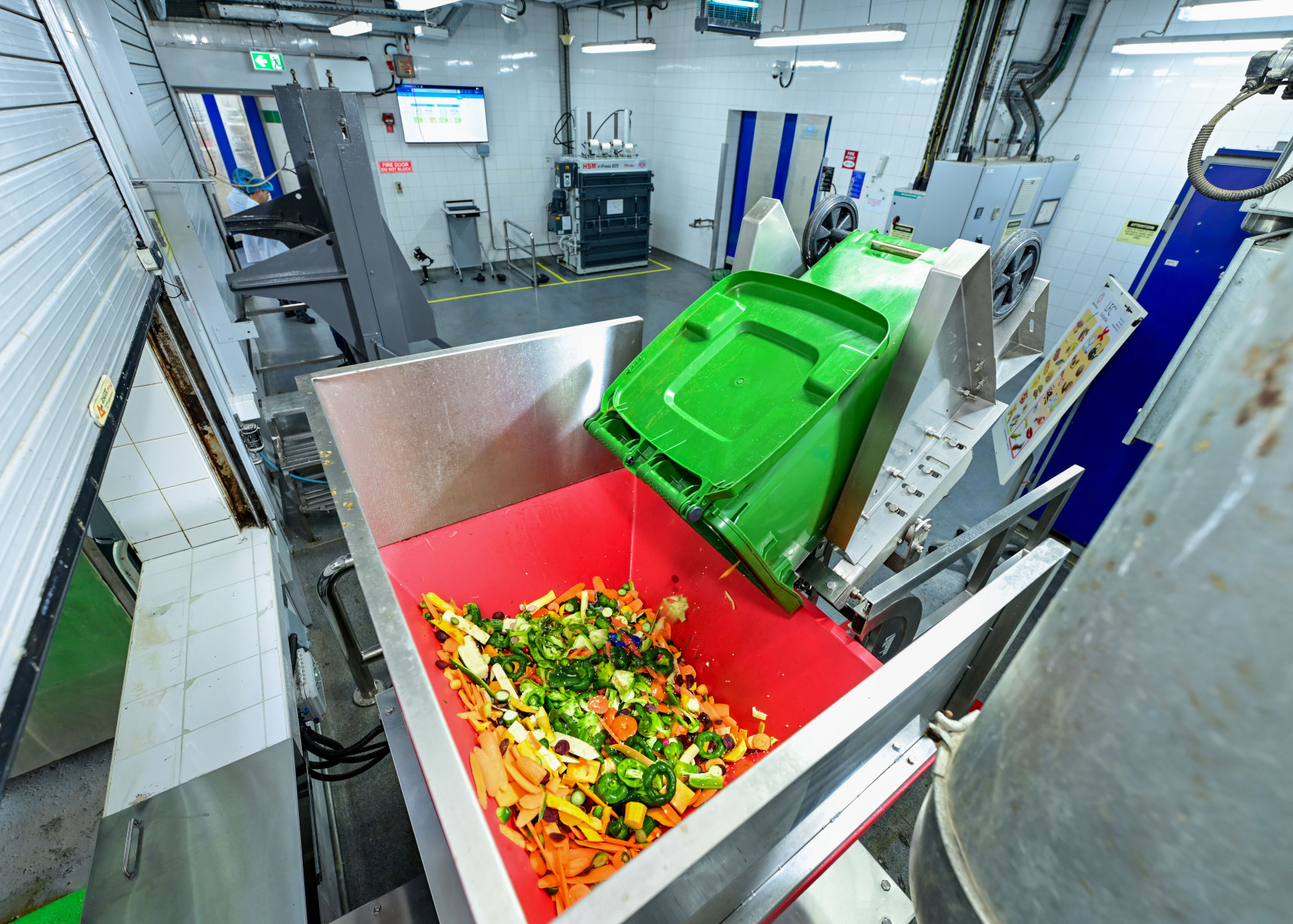
EKFC’S biodigester
Since December 2025, the current biodigester has been processing an average of up to 3.5 tonnes of waste per day. Current projections at EKFC estimate standards are estimated to increase food waste intake to around 6 tonnes per day.
Shahreyar Nawabi, Chief Executive Officer of Emirates Flight Catering, said:
“At EKFC, when we look at where we can make the greatest difference, it’s in how we handle waste by treating it responsibly, diverting it from landfill, and finding ways to put it back into productive use. Commissioning a biodigester of this scale is a major operational milestone for us as we accelerate EKFC’s landfill diversion efforts.”
A biodigester is a system that breaks down food waste through aerobic digestion, using oxygen, heat and microorganisms. This produces grey water, which can be repurposed for non-potable use. The biodigester is a more efficient system as its microbial culture matures and adapts to a wider variety of feedstock.
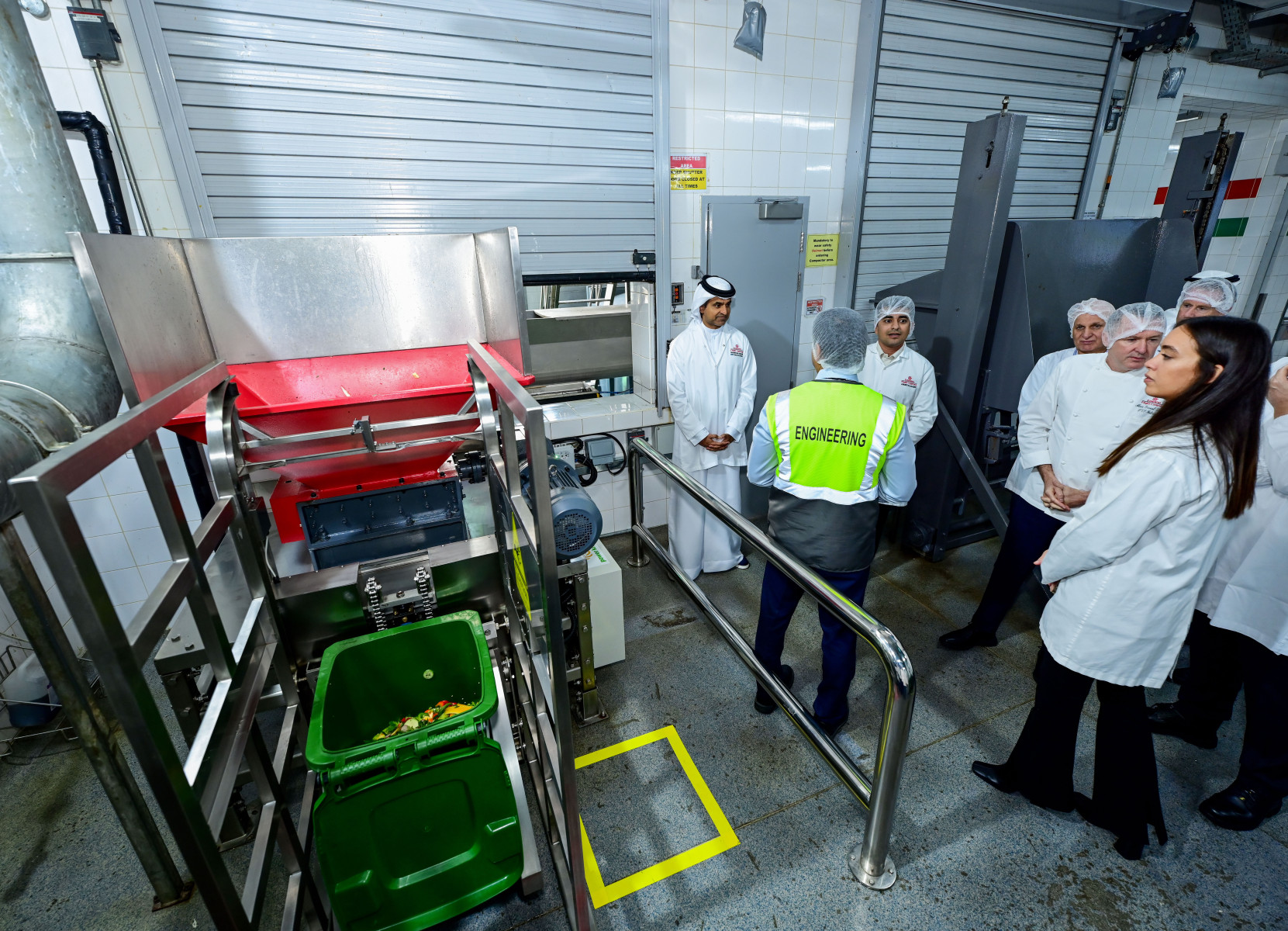
EFKC’ sustainability efforts
It is estimated through the UK’s Department for Environment, Food & Rural Affairs (DEFRA) aligned GHG conversion factors, that diverting one tonne of food waste from landfill avoids approximately 0.7 tonnes of carbon dioxide equivalent (tCO₂e) per tonne, primarily by preventing methane emissions stemming from decomposition in landfill. Through the implementation of this system, EFKC aim to reduce annual CO₂ emissions by 2,000 tonnes. This will make a considerable impact, with EFKC providing its catering services to over 100 airlines and producing 200,00 meals in the previous year.
EFKC have strived to make their operations more sustainable. Through its first LFC-50 biodigester, EKFC processed nearly 75,000 kg of food waste last year and eliminated 45,000 kg of plastic annually through packaging changes. 47 recipes have been developed using production trimmings to repurpose potential waste, and pesticide-free lettuce from Bustanica was used for 28,000 Emirates salads in the past year.
The biodigester is one part of EFKC’S plan of investing in sustainable practices. Solar panels were installed last year, generating 4,000 MWh and avoiding 1,600 tonnes of carbon dioxide equivalent (CO₂e). Electric vehicles are to be included across operations, with the region’s firsts electric high-loader expected by mid 2026.
What do you think of EKFC’s sustainable efforts? Share yours thoughts down in the comments below.