By using this site, you agree to the Privacy Policy and Terms of Use.
Accept
Travel Radar - Aviation NewsTravel Radar - Aviation News
  • Breaking News
  • Aviation
    • Aircraft
    • Airlines
    • Airshow & Events
    • Careers
    • Manufacturing
  • Travel
    • Airports
    • Points & Loyalty
    • Technology
    • Trip Reviews
  • Newsletters
  • Aircraft for Sale
Reading: The History and Development of Air Traffic Control Systems
Share
Sign In
Notification Show More
Font ResizerAa
Font ResizerAa
Travel Radar - Aviation NewsTravel Radar - Aviation News
  • Breaking News
  • Aviation
    • Aircraft
    • Airlines
    • Airshow & Events
    • Careers
    • Manufacturing
  • Travel
    • Airports
    • Points & Loyalty
    • Technology
    • Trip Reviews
  • Newsletters
  • Aircraft for Sale
Signin Sign In
Follow US
Copyright © Travel Radar Media Ltd. 2025 | All Rights Reserved
Travel Radar - Aviation News > News > Aviation > Route Development > The History and Development of Air Traffic Control Systems
AviationRoute Development

The History and Development of Air Traffic Control Systems

Taqdees Fatima
Last updated: 9 March 2025 17:57
By Taqdees Fatima
4 Min Read
Share
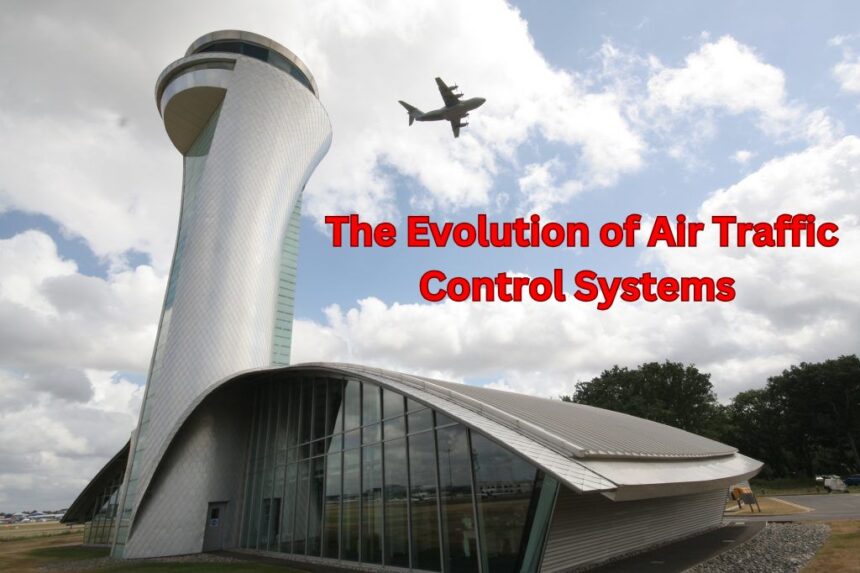
Evolution of Air Traffic Control Systems © Taqdees Fatima
SHARE

Air traffic control (ATC) is an essential system for aircraft to travel safely and effectively in the air and on the ground. It has changed dramatically, including new technologies and techniques.
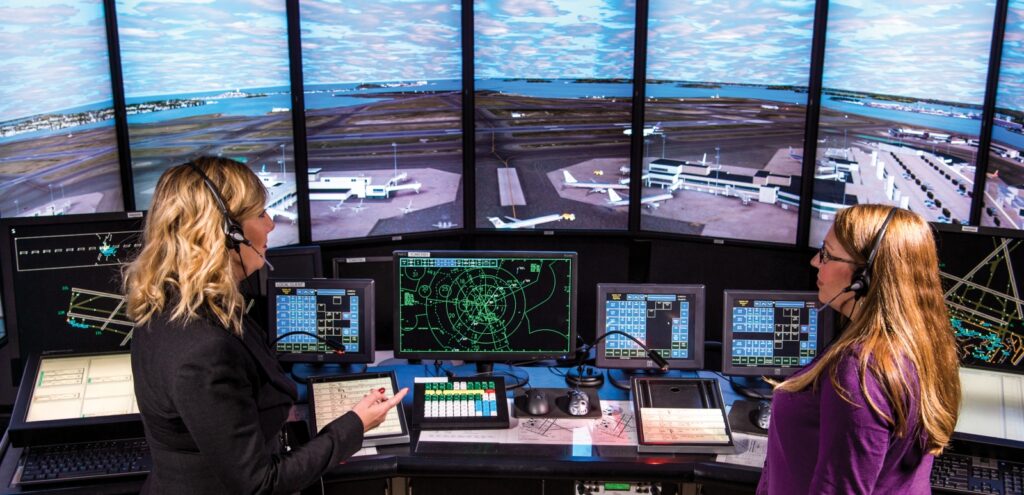
Representatives of air traffic control system
Air Traffic Control Room © MIT Lincoln Laboratory 

Timeline of Air Traffic Control Systems


  • Early Days of Aviation

Early aviation relied on basic visual cues and pilot cooperation to prevent collisions. In 1920, London’s Croydon Airport introduced the first air traffic management. At that time, air traffic controllers used flags to guide pilots. With the advent of radio transmission in the 1930’s, air traffic management made tremendous strides. Direct communication between pilots and ground controllers improved flight coordination and decreased the chance of mid-air crashes. In 1930, Cleveland Municipal Airport in the United States installed the first control tower with a radio.

  • Role of World War II in Air Traffic Control

World War II hastened the advancement of air traffic control systems and other aviation technologies. Radar technology became widely used because military activities required accurate aircraft monitoring. By the 1940’s, the radar system was being adapted for civilian air traffic control. Radar helps controllers improve situational awareness and more efficient airspace management by enabling real-time aircraft position monitoring.

  • Cold War Era Scenario

After World War II, commercial aviation grew at a rate never seen before. A mid-air collision between two commercial aeroplanes over the Grand Canyon in 1956 brought attention to the necessity of an all-encompassing air traffic control system. The US government established the Federal Aviation Administration (FAA) in 1958 to oversee and manage air traffic control operations.

  • Era of Technology

The 1970’s and 1980’s saw the introduction of digital technology, which revolutionised air traffic control systems. Automated systems were used to aid controllers in handling flight data and determining the best aircraft routes. In the 1980’s, the Traffic Alert and Collision Avoidance System (TCAS) came into effect. Pilots received real-time collision avoidance guidance from it.

  • Satellite-Based Navigation 

Satellite technology transformed the air traffic control system in the 1990’s and early 2000’s. The Global Positioning System (GPS) lessened the need for radar stations on the ground. In the 21st century, the Automatic Dependent Surveillance-Broadcast (ADS-B) technology significantly improved air traffic control. Aircraft can broadcast their position, velocity, and altitude to other aircraft and ground stations using ADS-B.

  • Present Scenario

Air traffic control systems are still evolving with the advancement of automation, machine learning, and artificial intelligence (AI). The FAA’s Next Generation Air Transportation System modernises air traffic control through improved data exchange, predictive analytics, and real-time weather monitoring. Additional advancements include remote tower technology, which uses digital communication tools and high-resolution cameras to allow controllers to oversee airport traffic from a central location.
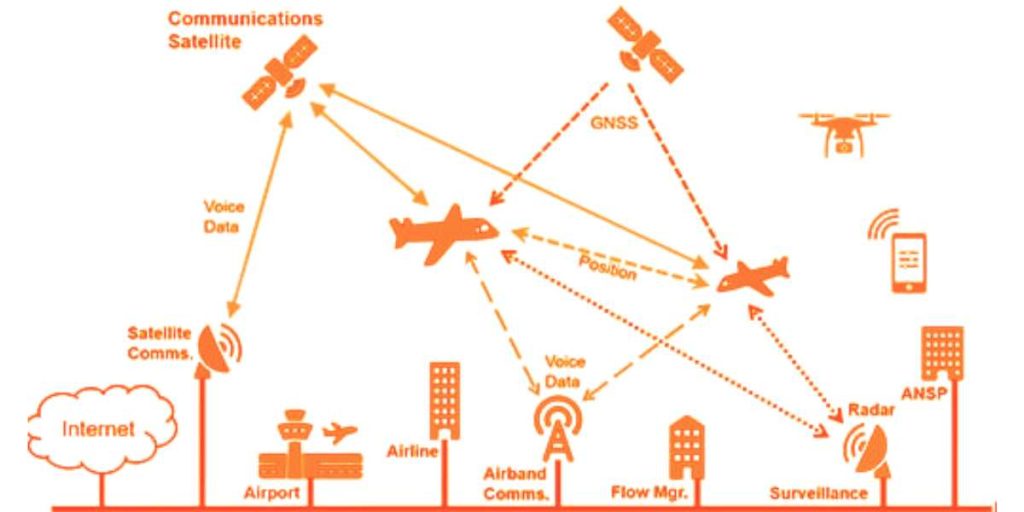
Air Traffic System
A Visual Representation of Next-Generation Air Traffic Control System © Airport Manufacturers Expo Online

This is a short evolution story of air traffic control systems. What are your thoughts? Let us know in the comments!

You Might Also Like

Japan’s 7.6 magnitude Earthquake Causes Disruptions
Boeing to Cut 17,000 Jobs After Strikes End
UK Aviation Minister visits Jet2.com training facility
What Seasoned Travelers Do Between Flights That Tourists Don’t
Nok Air forced to suspend all international flights
Share This Article
Facebook Twitter Email Copy Link
What’s your thoughts?
Love0
Sad0
Happy0
Angry0
Taqdees Fatima
ByTaqdees Fatima
Aviation Reporter - With a strong interest in the evolving dynamics of air travel and airport operations, Taqdees delivers clear and engaging coverage for readers across the aviation community.
Previous Article Boeing 777-31H, Emirates airlines at Dubai International Airport Emirates Airline Extends Partnership with Costa Cruises Through 2027
Next Article Avianca Cargo docking Avianca Cargo Wins ESG and Sustainability Award
Subscribe
Login
Notify of
guest

guest

0 Comments
Oldest
Newest Upvoted
Inline Feedbacks
View all comments

Stay Connected

FacebookLike
TwitterFollow
InstagramFollow
YoutubeSubscribe

Trending News

airBaltic Airbus
airBaltic celebrates 30 years of direct service on Riga-Copenhagen route
Airlines Aviation
A Lufthansa aircraft sits on the runway under a blue sky, its bright white fuselage clearly visible
Lufthansa and Amadeus Simplify Bookings With One Order ID
Airline Economics Airlines Aviation Technology
An Avelo Airlines aircraft flies over Houston’s skyline, with blue skies and downtown skyscrapers visible below
Avelo Airlines Plans Base Closures as It Focuses on Core Markets
Airlines Airports Aviation
Ethiopian Airlines on tarmac
Ethiopian Airlines Adds Lyon Flights to Expand France Network
Aircraft Airline Economics Airlines Aviation Route Development
American Airlines adds over 8,000 additional seats on more than 50 extra flights on their Eastern Caribbean route since resuming their services.
American Airlines Adds 8,000 Seats to Eastern Caribbean Route
Airlines Aviation Route Development Travel

Travel Radar is the leading digital hub for all things aviation and air-travel. Discover our latest aviation news, aviation data, insight and analysis.


Discover

  • Latest News
  • Subscribe
  • Weekly Digest
  • Contact Us
  • Privacy Policy
  • About Us
  • Advertising
  • Media Coverage
  • Press & Events
  • Join Our Team
  • Our Brands

Signup to our Newsletter!

And get the latest aviation news via our weekly news digest!

© Travel Radar Media Ltd. 2015-2025 | ISSN #2635-0696 | Trademark #UK00003579704
wpDiscuz
adbanner
Welcome to the TR Community!

Sign in to your account

Not a member? Sign Up