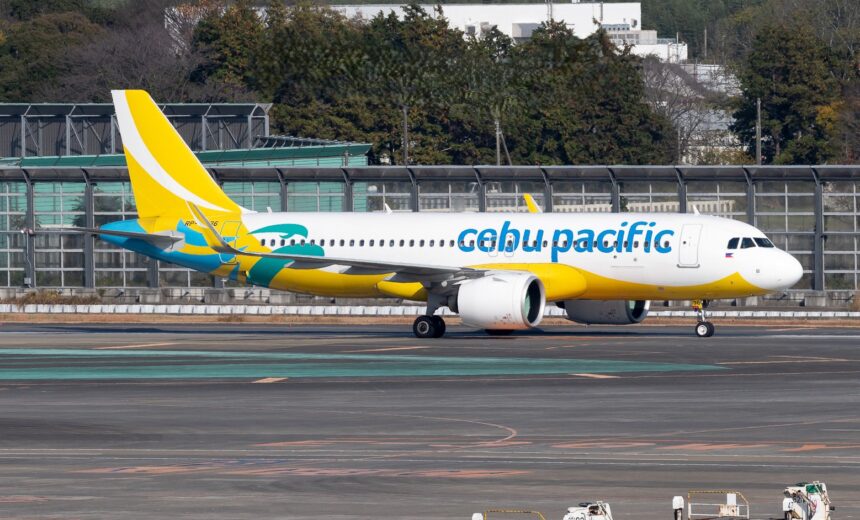
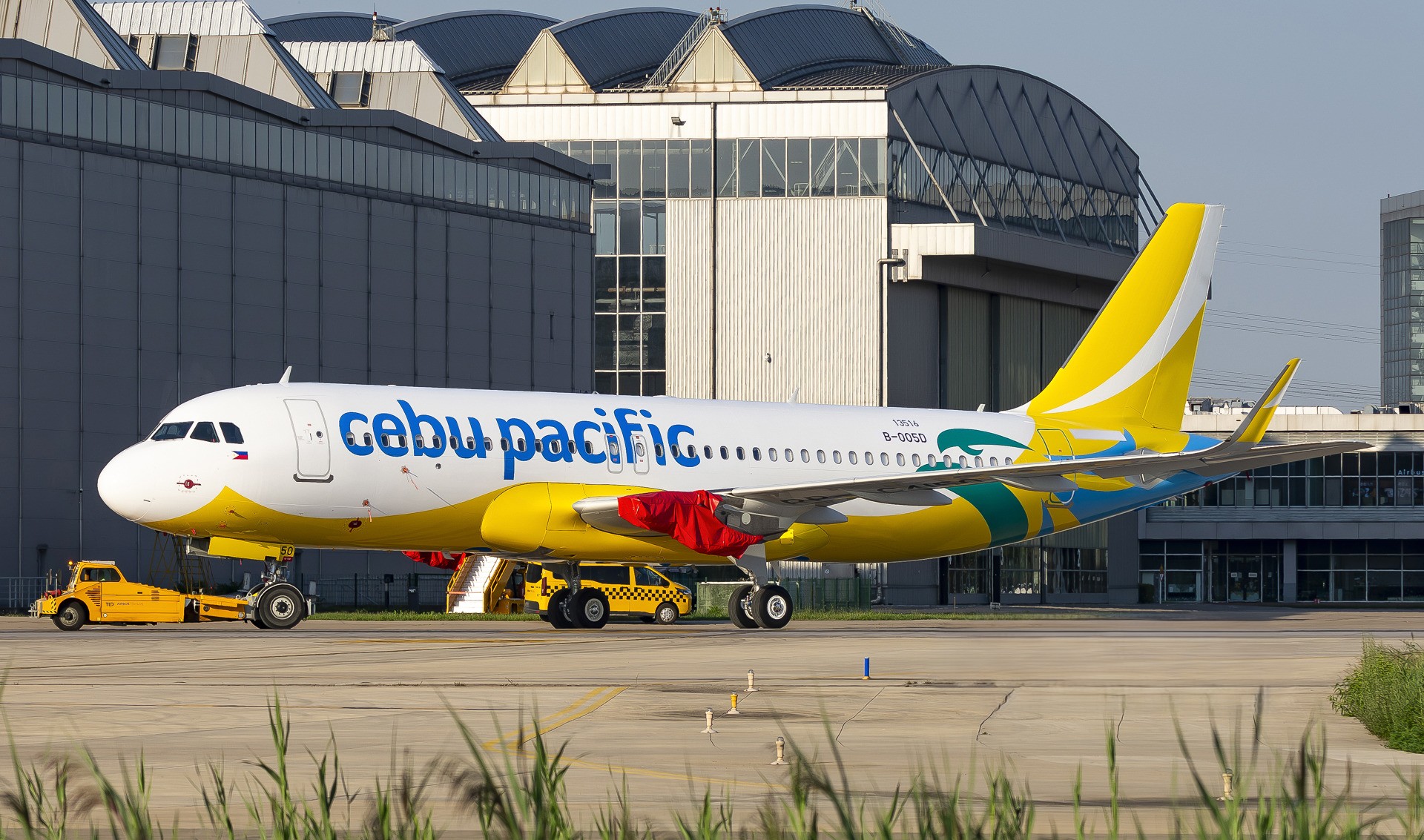
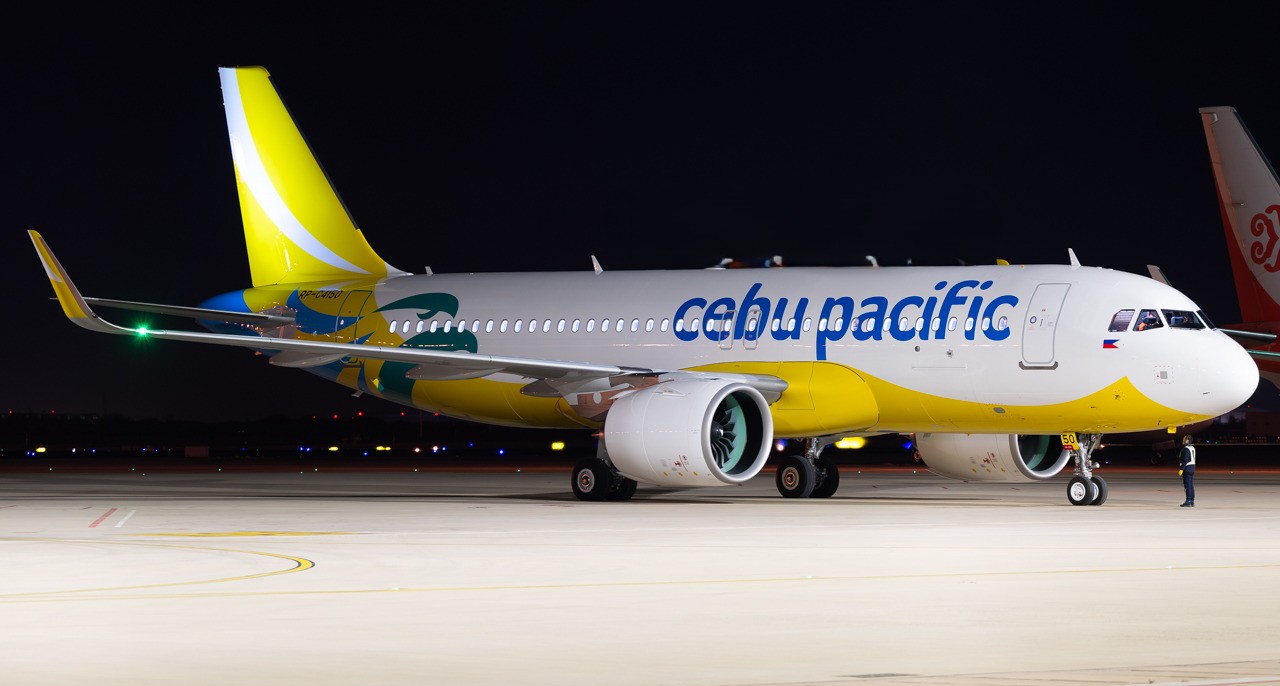
Philippines low-cost carrier Cebu Pacific inducted another Airbus A320neo to its fleet as it heads into the busiest travel period of the year. According to AirNav Radar data, the aircraft departed Tianjin (TSN) on Nov. 18, 2026., at 2:10 p.m. UTC, from the Airbus facility where it was assembled and fitted with its engines. It landed in Manila (MNL) on Nov. 19. at 2:21 a.m. local time (Nov. 18. at 6:21 p.m. UTC).
Capacity Addition Ahead of Christmas Rush
Speaking about the delivery, Cebu Pacific President and Chief Commercial Officer Xander Lao said:
“As we approach the peak holiday travel season, having additional aircraft in our fleet helps us prepare for increased passenger demand.”
He added that the airline is keen on continued investment in modern, efficient jets, “allowing us to grow our capacity while improving fuel efficiency and operational performance.” According to the airline, neo-generation aircraft, including the A320neo, A321neo and A330neo, make up 78% of its total fleet, and it expects to receive seven A320neos in total this year.
The airline said the A320neo helps it manage costs amid volatile oil prices, and also cuts emissions and noise. The aircraft, registered RP-C4150, began commercial operations on Nov. 21. 2026, with flight 5J2269 from Manila to Iloilo (ILO).
Losses Increase Despite Higher Revenue
Earlier, the airline reported a net loss of 12.8 billion pesos (£156 million) for the January-September period, up from 2.4 billion pesos (£29 million) a year earlier, even though revenue rose 10% to 96.2 billion pesos (£1.17 billion).
The third quarter alone produced a net loss of 6.9 billion pesos (£84 million), with fuel expenses up 65% from a year earlier.
Higher fuel prices and foreign exchange losses weighed on the results, leading to an operating loss of 3 billion pesos (£37 million) and a core pre-tax loss of 8.6 billion pesos (£105 million) for the nine months.
The airline carried nearly 21 million passengers over the period, up 4%. Domestic traffic rose 5% to 15.7 million passengers, while international traffic held broadly stable at 5.1 million. Based on Civil Aeronautics Board data, its domestic market share grew to 63% in the third quarter from 55% a year earlier.
According to ch-aviation data, the airline’s fleet of 83 Airbus aircraft includes 40 A320s, 28 A321s and 15 A330s. The airline said its fleet gives it the widest network coverage in the Philippines.
With the holiday rush close, will the extra capacity be enough to keep up with demand? Let us know in the comments below.